
Dr Audrey New Jersey: Mental Health Therapist in Short Hills
If you’re a Short Hills resident carrying something heavy — a history you can’t quite shake, a nervous system that stays on high alert, relationships that keep hitting the same walls — you’ve likely already noticed that finding the right therapist isn’t as simple as a quick online search. Credentials matter. Experience matters. And the ability to actually connect with someone who understands the complexity of what you’re going through matters enormously.
That’s where Dr. Audrey Kteily, PhD, LPC-S comes in.
A Practice Built for Complex Work
Dr. Audrey Kteily isn’t a generalist who offers trauma therapy as one item on a long menu of services. Her practice is specifically oriented around complex PTSD, trauma therapy, and the layered psychological work that comes with it. With 17 years of clinical experience and a doctoral-level education in psychology, she brings a depth of understanding that goes far beyond standard talk therapy. She holds a Licensed Professional Counselor — Supervisor credential (LPC-S), which places her in a tier of practitioners who not only do this work but are qualified to train others in it. She’s also a Certified Family Life Educator (CFLE), which informs her approach to how trauma ripples through families and close relationships.
For Short Hills residents, this kind of specialized expertise is genuinely rare to find at this level in the immediate area. Many people in the Short Hills community end up driving significant distances — or settling for general counseling that only scratches the surface. Dr. Audrey’s New Jersey practice offers something different: focused, sophisticated, evidence-informed care for people dealing with trauma that is complex, layered, and often long-standing.
What “Complex” Actually Means
There’s a meaningful difference between a single-incident trauma and complex PTSD. PTSD from a specific event — an accident, a violent incident, a medical crisis — is serious and absolutely deserves treatment. But complex PTSD develops from prolonged, repeated, or relational trauma. Childhood neglect. Emotional abuse. Growing up in a household where safety was unpredictable. Years inside a relationship defined by control or humiliation. These experiences don’t just leave memories — they reshape how your nervous system operates, how you see yourself, how you connect with others, and how safe you believe the world to be.
People with complex PTSD often don’t recognize it as trauma at all. They might describe themselves as anxious, emotionally reactive, or struggling with self-worth. They might feel chronically exhausted without understanding why. They might notice that certain relationships — family dynamics, partnerships, even friendships — keep activating something deep and dysregulating. They may have tried therapy before and found it helpful only up to a point, as if there’s a floor beneath which the real work keeps waiting.
This is exactly the terrain Dr. Audrey works in every day.
Why Short Hills Residents Choose to Work with Dr. Audrey
Short Hills is part of Millburn Township, sitting along the Garden State Parkway and Route 24 corridors — and Dr. Audrey’s New Jersey office is accessible from Short Hills without the burden of a long commute. Whether you’re heading out from the Short Hills area toward her office, the drive is manageable, particularly given what’s waiting at the destination: a clinician who will actually do the deep work with you.
For a community where discretion often matters — where neighbors are neighbors, where professional and social circles frequently overlap — working with a psychotherapist who practices with genuine privacy and professionalism is not a small thing. Dr. Audrey’s practice reflects that understanding. This isn’t a high-volume clinic cycling through patients. It’s an intimate, focused practice where your work is given the attention and continuity it deserves.
Many clients who come from the Short Hills area arrive having already tried other avenues. They’ve worked with a counselor or therapist who helped somewhat. They’ve read books, tried mindfulness apps, maybe even participated in group programs. And still, something foundational hasn’t shifted. That’s not a failure on their part — it’s often a signal that the work requires a higher level of clinical specificity. Trauma that has woven itself into the nervous system, the self-concept, and relational patterns needs a practitioner who understands how those threads connect and how to address them in a deliberate, coordinated way.
Therapy That Reaches the Root
What Dr. Audrey offers isn’t a quick fix or a symptom-management protocol. Her work as a psychotherapist and counselor is oriented toward genuine, lasting change — the kind that doesn’t just reduce distress but fundamentally alters how you experience yourself and your relationships. Whether you’re coming in as an individual navigating the aftermath of childhood trauma, or as part of a family trying to understand how trauma has shaped your dynamics, her approach is tailored to what you specifically need.
Source: www.nasw.org
Short Hills residents dealing with the weight of unprocessed trauma deserve access to care that meets the complexity of what they’re living with. That care is available — close by, practiced with real expertise, and offered by someone who has spent nearly two decades doing this work with seriousness and skill.
Trauma Therapy and Mental Health Services Available to Short Hills Residents
Short Hills is a small, affluent community nestled within Millburn Township in Essex County — a place known for its tree-lined streets, top-rated schools, and a pace of life that, from the outside, looks enviable. But the appearance of calm doesn’t mean the absence of struggle. Many Short Hills residents quietly carry the weight of trauma, anxiety, unresolved family conflict, and the kind of chronic stress that doesn’t announce itself dramatically — it just accumulates. Dr. Audrey Kteily, PhD, LPC-S, provides specialized clinical services designed precisely for these kinds of complex, layered experiences.
Complex PTSD and Trauma Therapy
Complex PTSD is one of the most frequently misunderstood conditions in mental health. Unlike single-incident PTSD — which develops after one clearly defined traumatic event — complex PTSD emerges from prolonged, repeated exposure to trauma. This might mean childhood emotional neglect, years of living in an unpredictable or controlling household, relational abuse, or chronic exposure to environments where safety felt uncertain. Many people with complex PTSD don’t recognize what they’re dealing with. They know something is off — the hypervigilance, the difficulty trusting people, the shame that seems to have no origin, the emotional flashbacks that hit without warning. But they’ve often been told, or have told themselves, that they’re just “too sensitive” or “overthinking things.”
That’s not an accurate picture, and it’s not how Dr. Audrey approaches this work.
PTSD therapy at this practice is carefully structured to address both the symptoms you’re experiencing now and the underlying experiences driving them. This isn’t about rehashing every painful memory. It’s about building a therapeutic relationship that’s stable enough to actually process what happened — and learning how to regulate your nervous system so you’re not constantly bracing for impact. For Short Hills residents who’ve been managing high-functioning lives while privately exhausted by their own internal world, this kind of targeted trauma therapy can be genuinely life-changing.
Individual Psychotherapy and Counseling
Beyond trauma-focused work, Dr. Audrey offers individual psychotherapy and counseling that addresses a range of mental health concerns — depression, anxiety, grief, life transitions, identity questions, and relational patterns that keep showing up in different areas of your life. The clinical approach is thoughtful and personalized. There’s no rigid script here.
As a licensed professional counselor supervisor (LPC-S) with a doctoral degree and 17 years of clinical experience, Dr. Audrey brings both depth of training and genuine human attentiveness to each session. Psychotherapy at this level isn’t just symptom management — it’s real insight-oriented work that helps you understand why you respond the way you do, and what it would take to actually change those patterns rather than just manage them indefinitely.
Short Hills residents — whether you’re in the Glenwood section, near the Short Hills train station, or closer to the Millburn border along White Oak Ridge Road — can access these services at the New Jersey office without a prohibitively long commute.
Family Therapy and Counseling
Family dynamics are complicated. Sometimes the same family that provided comfort also caused harm — and holding both of those truths at once is genuinely difficult. Dr. Audrey works with families navigating conflict, communication breakdowns, the aftermath of trauma that’s rippled across generations, and the specific friction that can arise during major transitions like divorce, adolescence, or a family member’s mental health crisis.
Family therapy here is not referee work. It’s clinically guided conversation aimed at helping family members actually hear each other — often for the first time — and begin to rebuild trust and function more honestly as a unit. This service is particularly relevant for Short Hills families who may have maintained a high level of external functioning while silently dealing with significant internal disconnection.
Accessing Services from Short Hills
Short Hills residents have straightforward access to the New Jersey office. From Short Hills, the drive typically takes approximately 15 to 25 minutes depending on your exact starting point and traffic — particularly on JFK Parkway or Springfield Avenue during commuter hours. If you’re traveling from the heart of Short Hills near the Mall at Short Hills, you’re looking at a relatively short trip south into the broader New Jersey service area.
Source: www.who.int
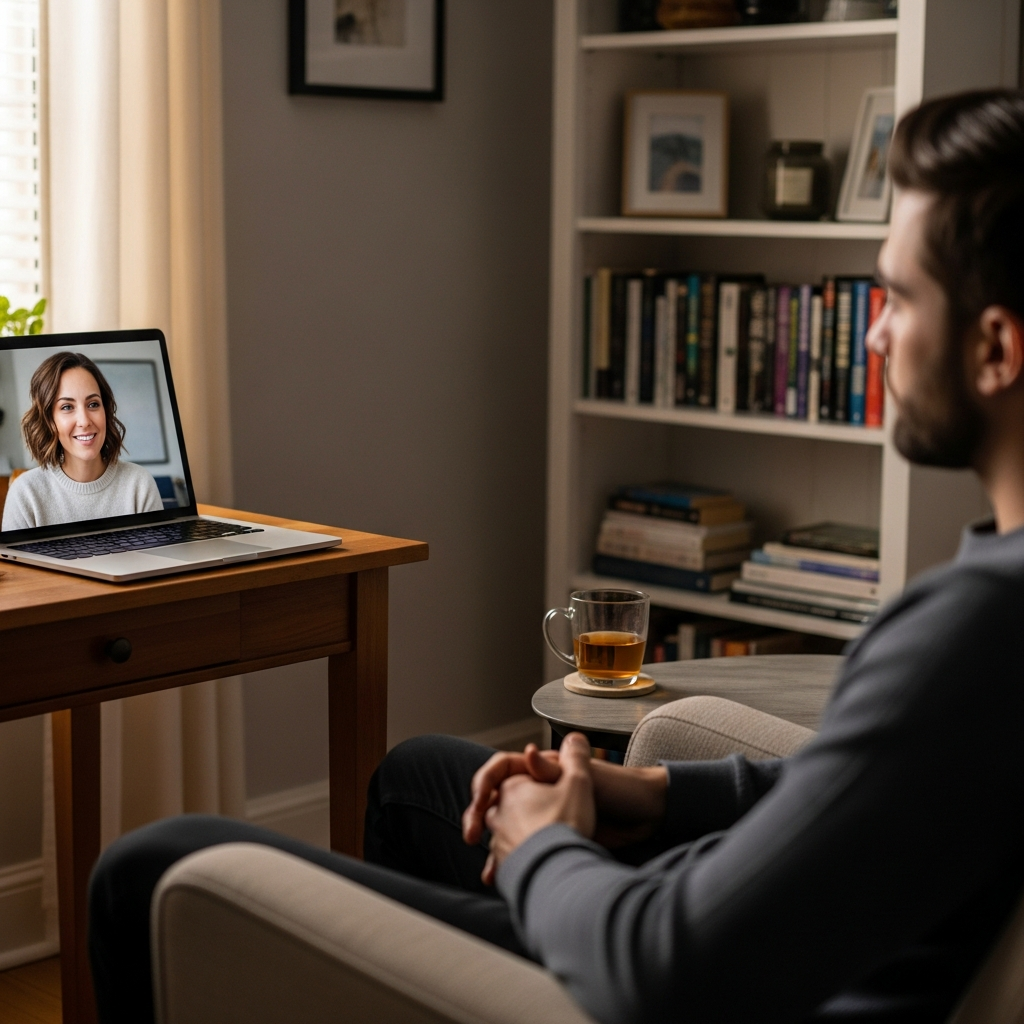
For those who prefer not to drive, telehealth sessions are available for eligible clients — making it possible to access the same quality of care from your home in Short Hills without any commute at all. This is a practical option many working parents, professionals with demanding schedules, and individuals managing anxiety around driving or public settings find genuinely useful.
What Your First Step Looks Like
Reaching out for the first time is often the hardest part. If you’re a Short Hills resident who’s been considering therapy — whether for complex PTSD, family counseling, or individual psychotherapy — the process begins with a direct inquiry by phone. Dr. Audrey’s practice is built on clinical seriousness and genuine human warmth, and the intake process reflects both. You’ll have a chance to discuss what you’re dealing with, ask questions about the approach, and determine whether this is the right fit before committing to anything.
Whether you’ve been carrying trauma for years without a name for it, or you’re a family that’s finally ready to address what’s been going unsaid — these services exist for exactly that.
Why Short Hills Residents Trust Dr. Audrey Kteily for Trauma Therapy and Complex PTSD Treatment
Short Hills is a community that holds itself to a high standard. Residents here are discerning — they research thoroughly before making decisions, especially when it comes to something as personal as mental health care. When people from Short Hills are looking for a trauma therapist, a psychotherapist, or a counselor who genuinely specializes in complex PTSD, they’re not just searching for credentials on a wall. They’re looking for someone who actually understands what they’re going through and has the clinical depth to help them move forward.
That’s exactly what Dr. Audrey Kteily, PhD, LPC-S brings to the table.
A Level of Expertise That’s Genuinely Hard to Find
Dr. Audrey holds a doctoral degree in her field and carries the designation of Licensed Professional Counselor — Supervisor (LPC-S), which means she’s not only qualified to provide psychotherapy and counseling herself — she’s also credentialed to supervise other licensed clinicians. That’s a distinction that matters. It signals a depth of training that goes well beyond a standard therapy license.
She’s also a Certified Family Life Educator (CFLE), a credential that adds a meaningful layer to her work with families navigating trauma. Complex PTSD doesn’t exist in a vacuum — it affects relationships, parenting, communication, and the entire family system. Having a family therapist and mental health therapist who understands both the individual trauma response *and* the family dynamics surrounding it is a significant clinical advantage.
With 17 years of experience working with trauma, PTSD, and complex presentations, Dr. Audrey has seen the full range of what trauma looks like — from single-incident PTSD to layered, developmental trauma that’s been quietly shaping someone’s life for decades. She brings that breadth to every session.
Specialized Focus on Complex PTSD — Not Just General Counseling
A lot of therapists say they treat trauma. Fewer have a concentrated, specialized focus on complex PTSD and trauma therapy as a core part of their clinical identity. There’s a real difference between a generalist who occasionally sees trauma clients and a psychotherapist who has built her entire practice around understanding how chronic trauma reshapes the nervous system, identity, relationships, and sense of safety.
Complex PTSD — often stemming from prolonged abuse, childhood neglect, domestic violence, or repeated traumatic experiences — requires a different clinical approach than standard PTSD. It involves working with deep-seated shame, difficulty regulating emotions, fractured self-perception, and relationship patterns that developed as survival strategies. Dr. Audrey’s approach accounts for all of this. She works with clients not just to process traumatic memories, but to rebuild the internal architecture that trauma dismantled.
For Short Hills residents who’ve already tried therapy and felt like it didn’t quite reach the core of what they were dealing with — this specialization is often the missing piece.
What Short Hills Clients Actually Say
Source: www.apa.org
People don’t come to Dr. Audrey for a surface-level fix. They come because something hasn’t worked elsewhere, or because they knew from the start they needed someone with a genuinely high level of expertise. Clients consistently describe her as someone who takes the complexity of their experience seriously — who doesn’t rush to reframe or reassure, but instead makes real space for the full weight of what they’ve been through.
That quality of presence, combined with rigorous clinical training, is what keeps referrals coming in from across northern and central New Jersey — including regularly from Short Hills and the surrounding Millburn area.
Addressing the Travel Question Honestly
Some Short Hills residents wonder whether it’s worth making the trip to Dr. Audrey’s New Jersey office rather than choosing someone closer to home. It’s a fair question, and the honest answer is: it depends on what you need.
If you’re managing mild stress or looking for general life coaching, geography might be your primary filter. But if you’re dealing with complex PTSD, significant trauma history, or family-level trauma dynamics — the quality and fit of the therapist matters far more than the commute.
Short Hills sits in the southwestern corner of Essex County, and Dr. Audrey’s New Jersey office is easily accessible from here. Most clients traveling from Short Hills reach the office in roughly 20 to 30 minutes, depending on traffic. The most common route takes you out via Route 24 West or connects through Millburn Avenue — straightforward driving with no complicated highway navigation. For clients who prefer flexibility, telehealth sessions are also available, which means you can access the same level of specialized trauma therapy without leaving your home.
Many clients actually find that a short commute creates a useful psychological boundary — the drive gives them time to transition mentally before and after sessions, which can be genuinely helpful in trauma work.
Why Credentials and Experience Aren’t Just Buzzwords Here
In a town like Short Hills, people understand the value of expertise. You wouldn’t hire a general contractor to do specialized structural engineering work. The same logic applies to psychotherapy. A PhD-level, LPC-S credentialed psychotherapist with 17 years of focused experience in trauma and complex PTSD is a meaningfully different resource than a newly licensed counselor seeing a general caseload.
Dr. Audrey’s combination of academic training, clinical licensure, supervisory credentials, and family systems expertise positions her as one of the more substantive options for trauma-focused mental health care in this region. For Short Hills residents who are serious about getting real clinical help — not just checking a box — that distinction is exactly what they’re looking for.
How Far Is the Office from Short Hills, and How Do I Get There?
Short Hills sits in the heart of Millburn Township, which puts you in an excellent position geographically. The office is easily accessible from Short Hills — most clients make the drive in roughly 10 to 20 minutes depending on traffic. If you’re coming from the Short Hills area, you’ll likely hop onto Route 24 or take Millburn Avenue, both of which connect seamlessly to the surrounding Essex and Union County road network. Many Short Hills residents appreciate that the commute doesn’t eat into their day the way a longer drive might. It’s one less barrier when you’re already doing the hard work of showing up for therapy. If you’d like specific turn-by-turn directions from your neighborhood, just call the office and we’ll walk you through it.
I’ve Never Done Trauma Therapy Before — What Should I Actually Expect in the First Few Sessions?
That’s one of the most common questions, and it’s a genuinely important one. The first session isn’t about immediately unpacking every difficult experience you’ve had — it’s really about getting to know each other. Dr. Audrey will ask about what’s been going on for you, what’s prompted you to reach out now, and what you’re hoping therapy can help with. For complex PTSD in particular, the early work tends to focus on building a sense of safety and stability before anything deeper is explored. Think of it less like jumping into the deep end and more like learning to trust the water first. You won’t be pushed to share anything before you’re ready. The pace is yours to set, and that’s intentional.
Does Dr. Audrey Work with Families, or Is This Only Individual Therapy?
Both, actually. Dr. Audrey Kteily offers individual therapy, psychotherapy, and family therapy, which matters a great deal for Short Hills residents dealing with trauma that doesn’t stay neatly contained to one person. Complex PTSD and trauma often ripple through family systems — a parent’s unresolved trauma affects how they show up at home, a teenager’s struggles affect the whole household dynamic. As a Certified Family Life Educator (CFLE) with a PhD and 17 years of clinical experience, Dr. Audrey brings a genuinely systemic lens to this work. Whether you’re coming in alone, as a couple, or looking for support that involves your family, there’s a path forward here.
Source: www.apa.org
What If My Schedule Is Complicated? I Work Long Hours and Can’t Always Do a Standard 9-to-5 Appointment.
Short Hills is a community where a lot of people maintain demanding professional lives, and that reality doesn’t disappear just because you’ve decided to prioritize your mental health. Scheduling flexibility is something the practice takes seriously. It’s worth calling or reaching out directly to discuss your specific availability — early appointments, later afternoon slots, and other accommodations can often be arranged. The goal is to make consistent attendance realistic for you, because trauma therapy works best when it’s regular and not constantly interrupted by scheduling conflicts. Don’t let a complicated calendar be the reason you put this off.
How Is Complex PTSD Different from Regular PTSD, and Does That Change How Therapy Works?
Great question, and one worth understanding clearly. Standard PTSD typically develops in response to a single traumatic event — a car accident, a natural disaster, an assault. Complex PTSD (sometimes written as C-PTSD) develops from prolonged, repeated trauma — things like childhood abuse or neglect, long-term domestic violence, or growing up in an unpredictable or emotionally unsafe environment. The symptoms overlap with PTSD but often include additional layers: deep difficulties with self-worth, problems with emotional regulation, troubled relationships, and a pervasive sense of shame. Treatment for complex PTSD tends to be more gradual and phase-based than standard trauma protocols. Dr. Audrey’s approach accounts for this complexity — you’re not going to be handed a six-week workbook and sent on your way.
Do You Accept Insurance, and What Are the Payment Options for Short Hills Residents?
Insurance and payment details are best discussed directly with the office, since coverage varies widely depending on your specific plan. Many residents in the Short Hills area carry employer-based insurance through major carriers, and it’s worth calling to ask about your options before assuming therapy isn’t financially accessible. The office can help clarify what to expect regarding fees, whether your plan includes out-of-network benefits, and what the reimbursement process looks like. Don’t let uncertainty about cost stop you from making that first call — the conversation is free, and the information you get will help you make a clear-eyed decision.
You Deserve Support That Actually Fits Your Life
Short Hills is a community where people work hard, hold things together, and often look composed even when something underneath isn’t right. If that describes you — if you’ve been managing, coping, pushing through — you already know that getting by isn’t the same as feeling well. And you probably know that the things you’ve been carrying for a long time don’t tend to resolve on their own.
That’s not a character flaw. That’s just how trauma and chronic stress work. They settle in. They become the background noise of your daily life, shaping how you respond to your partner, your kids, your colleagues, yourself. The good news is that with the right support, things genuinely do shift. Not overnight, and not without some honest work — but in ways that are real and lasting.
Dr. Audrey Kteily, PhD, LPC-S, has spent 17 years working with people navigating exactly these kinds of challenges. Complex PTSD, trauma histories that span decades, relationship patterns that feel impossible to break, anxiety that’s been there so long it almost seems like personality — these are the things she works with every day. Her approach is evidence-informed and clinically rigorous, but it’s also genuinely human. You won’t feel like a diagnosis here. You’ll feel like a person.
Whether you’re coming to therapy for the first time or returning to it after a long gap, you don’t need to have everything figured out before you reach out. You don’t need the right words, a clear explanation of what’s wrong, or certainty that this is the right moment. The only thing you need is a willingness to take one small step.
Short Hills residents are well-positioned to access the New Jersey office conveniently — the drive typically takes around 15 to 20 minutes depending on your route, making it realistic to fit appointments into a busy week rather than letting distance become another reason to put things off.
When you’re ready — or even just almost ready — we’d love to hear from you.
Reaching out doesn’t lock you into anything. A first conversation is simply a first conversation. You can call the office directly or use the online booking option, whichever feels more comfortable. The process is straightforward, the intake is handled with care, and your first priority will simply be feeling like this is a space where you can actually breathe.
Therapy at this level — with a practitioner who holds a PhD, is a Licensed Professional Counselor Supervisor, and carries certification as a CFLE — isn’t just about symptom relief, though that matters enormously. It’s about understanding yourself more clearly, building a relationship with your own inner life that isn’t driven by fear or old pain, and showing up in your relationships with more of who you actually are.
The people of Short Hills deserve that kind of care. Not managed wellness. Not surface-level coping. Real, grounded, thoughtful support.
Book an Appointment today and take that first step toward something different. Call the New Jersey office or visit online to find a time that works for your schedule. The team is here, the space is welcoming, and Dr. Kteily is ready to work with you — wherever you’re starting from.