
Dr Audrey New Jersey | Complex Ptsd Serving Ho-Ho-Kus
Trauma Doesn’t Care How Quiet the Street Is
Ho-Ho-Kus has a way of looking peaceful from the outside. The tree-lined streets off Sheridan Avenue, the historic district with its Victorian homes, the kind of neighborhood where people wave from their porches and kids ride bikes until dark. To someone passing through, it looks like a place where serious problems don’t quite reach.
But anyone who’s actually lived through trauma knows that setting doesn’t protect you from what’s happening inside. You can be sitting in the most picturesque borough in Bergen County — coffee in hand, everything technically fine — and still feel like you’re being pulled underwater by something you can’t name. Complex PTSD doesn’t announce itself with obvious warning signs. It shows up as hypervigilance in situations that should feel safe. As emotional numbness that makes it hard to connect with the people you love most. As a persistent sense that something is fundamentally wrong with you, even when your life looks fine on paper.
That’s exactly why people in Ho-Ho-Kus reach out to Dr. Audrey Kteily.
What Makes Complex Trauma Different — And Why It Requires Specialized Care
There’s a meaningful difference between PTSD and complex PTSD, and it matters enormously when you’re trying to find the right kind of support. Standard PTSD often stems from a single traumatic event — an accident, a natural disaster, an assault. Complex PTSD, or C-PTSD, develops from prolonged, repeated trauma. Childhood abuse or neglect. Years inside a controlling or emotionally abusive relationship. Growing up in a household where you never felt safe, never felt seen, never quite knew what version of a parent you’d come home to.
The effects of complex trauma aren’t just memories that intrude at inconvenient moments. They reorganize how you relate to yourself and to other people. They shape your nervous system in ways that make trust feel dangerous and vulnerability feel unbearable. They create patterns that can persist for decades — patterns in relationships, in self-perception, in the body itself — unless someone with real clinical expertise helps you work through them systematically and safely.
This is where therapy with a generalist simply isn’t enough. Complex trauma requires a psychotherapist who understands the neuroscience of prolonged stress responses, who knows how to work with dissociation and emotional dysregulation, and who can hold space for the kind of material that doesn’t resolve in a few sessions. It requires someone who has been doing this work long enough to know when to push and when to slow down.
Dr. Audrey Kteily, PhD, LPC-S, has been that person for clients across New Jersey for 17 years.
A Practitioner Ho-Ho-Kus Residents Trust
Dr. Kteily isn’t a general wellness coach or a counselor who dabbles in trauma between anxiety and relationship sessions. Her entire clinical focus is built around the people who have tried other approaches and found them lacking — the clients who have read the books, done the surface-level work, maybe seen another therapist for a while, and still feel stuck in the same cycles.
With a doctorate in her field, licensure as a Professional Counselor with Supervisor designation (LPC-S), and certification as a Certified Family Life Educator (CFLE), she brings both academic rigor and deep practical experience to every therapeutic relationship. That combination matters. It means she can speak to the research on trauma — what we know about how it forms, how it’s stored, how the brain and body hold onto it — while also meeting you exactly where you are in plain, honest language.
Her work spans complex PTSD, PTSD therapy, trauma therapy, individual psychotherapy, family therapy, and counseling for adults navigating the aftermath of experiences that have left lasting marks. Whether you’re carrying childhood wounds, processing relational trauma, or trying to understand why certain situations send you into a response you can’t control, Dr. Kteily’s approach is grounded, evidence-informed, and deeply human.
Ho-Ho-Kus to Dr. Kteily’s New Jersey Office — Closer Than You Might Think
Ho-Ho-Kus sits in the heart of Bergen County, and one of the genuine advantages of being in this part of New Jersey is access to some of the state’s best professional services without a long commute. Dr. Kteily’s New Jersey office is accessible from Ho-Ho-Kus without the kind of drive that makes you reconsider the appointment before you’ve even arrived.
From Ho-Ho-Kus, you’re looking at a straightforward route — most residents find the trip takes under 30 minutes depending on traffic and the specific destination. Whether you’re heading out via Route 17, the Garden State Parkway corridor, or cutting across through Bergen County surface roads, the commute is manageable. And for many clients dealing with anxiety, hypervigilance, or exhaustion that’s part of living with unprocessed trauma, the length and ease of a commute is genuinely part of whether they’ll actually follow through on getting support.
Source: www.nami.org
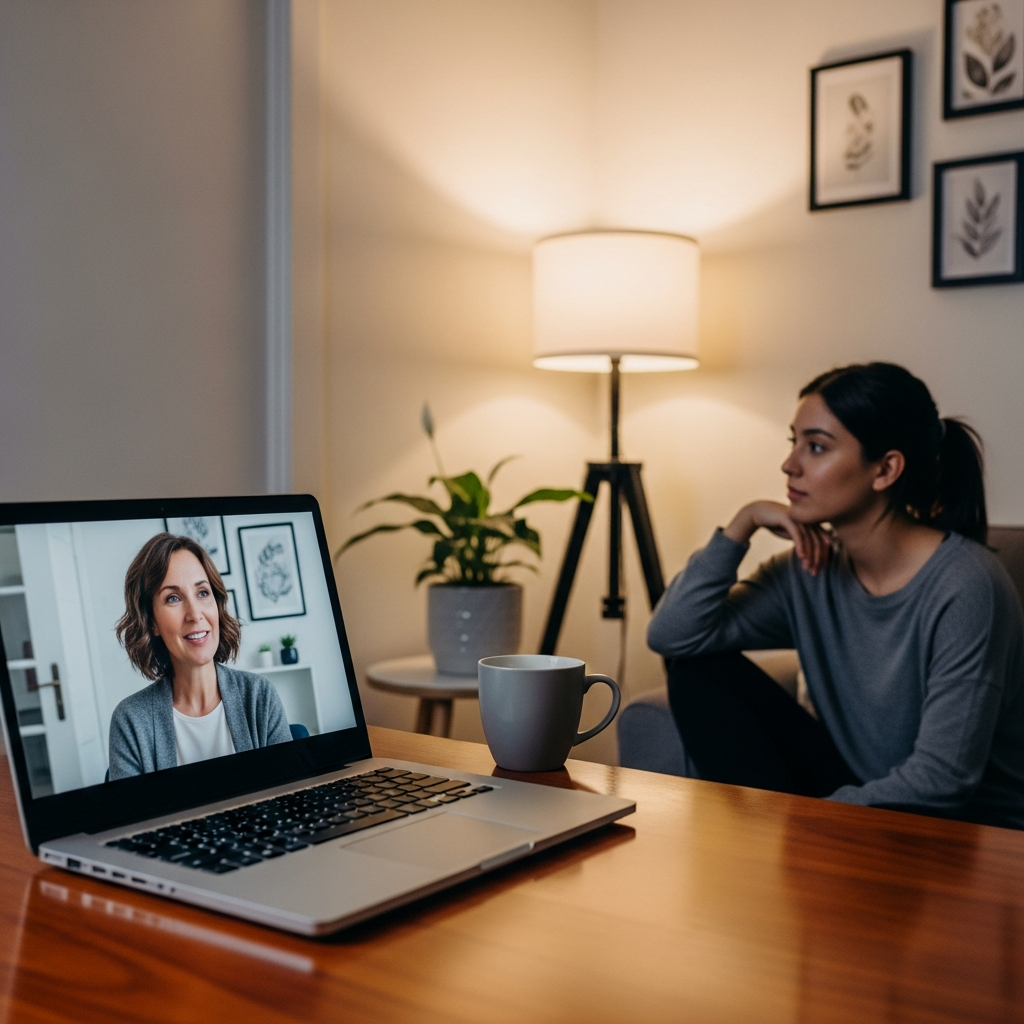
Telehealth options are also available for those who prefer to begin therapy from home — something that can feel especially important in the early stages of trauma work, when leaving the house to sit in a waiting room adds one more layer of exposure to an already vulnerable process.
You Don’t Have to Have It Figured Out Before You Call
One of the most common things Dr. Kteily hears from new clients is some version of: *”I wasn’t sure I was bad enough to need this.”* That hesitation is incredibly common, and it’s also one of the quieter ways that trauma keeps you stuck. Complex PTSD in particular has a way of making you minimize your own experience — to compare your pain to someone else’s and decide yours doesn’t count.
If you grew up in a home where things were hard but not “dramatic.” If you’ve spent years feeling like something is off but you can’t point to a single incident. If your relationships keep hitting the same walls and you don’t know why. If you feel disconnected from your own emotions, your own body, or your own sense of who you are — these are real experiences that deserve real attention.
Ho-Ho-Kus residents don’t have to keep white-knuckling through it alone.
Therapy and Counseling Services Available to Ho-Ho-Kus Residents
Ho-Ho-Kus is a small, close-knit borough in Bergen County — one of New Jersey’s most affluent and quietly demanding communities. Life here can look picture-perfect from the outside: tree-lined streets, historic homes, excellent schools. But beneath that surface, residents carry the same weight that people everywhere carry — trauma histories, relationship struggles, anxiety that doesn’t respond to a good night’s sleep or a vacation. If you’re in Ho-Ho-Kus and you’ve been searching for serious, experienced mental health support, Dr. Audrey Kteily offers a full range of therapeutic services that go well beyond what most practices provide.
Complex PTSD and Trauma Therapy for Ho-Ho-Kus Clients
Complex PTSD is not the same as PTSD from a single event. It develops over time — through prolonged exposure to emotional abuse, neglect, childhood dysfunction, controlling relationships, or environments where safety was never guaranteed. Many people living in communities like Ho-Ho-Kus have built successful, stable lives externally while carrying a deep internal architecture of hypervigilance, shame, and disconnection they can’t quite explain.
Dr. Audrey Kteily specializes in complex PTSD and trauma therapy, working with clients who often come in describing vague but persistent symptoms: difficulty trusting others, an inability to relax even when life is objectively fine, sudden emotional flooding, or a chronic sense of not belonging in their own lives. This isn’t general talk therapy. The work is specific, evidence-informed, and structured around how trauma actually lives in the nervous system — not just the story someone tells about it.
For residents of Ho-Ho-Kus who’ve been holding these patterns for years — sometimes decades — this kind of targeted trauma work can be genuinely life-changing. Dr. Kteily brings 17 years of clinical experience and a PhD-level depth of understanding to every session. She holds certification as a CFLE (Certified Family Life Educator), which means her lens on trauma always includes how it ripples through relationships, parenting, and family systems — not just the individual sitting across from her.
Individual Psychotherapy and Counseling
Beyond trauma-focused work, Dr. Kteily offers comprehensive individual psychotherapy and counseling for adults navigating a wide range of challenges. Whether you’re dealing with anxiety, depression, grief, life transitions, identity questions, or the slow erosion of self that happens in difficult marriages or demanding careers, therapy here is thoughtful and personalized.
As a licensed professional counselor-supervisor (LPC-S), Dr. Kteily works with the kind of complexity that many therapists aren’t equipped to handle. If you’ve tried therapy before and left feeling like you talked a lot but nothing really shifted — that’s a common experience among people who eventually find their way to this practice. The work here isn’t surface-level.
Family Therapy and Relationship Counseling
Ho-Ho-Kus families deal with real pressures — high-achieving environments, competitive academic cultures, blended family dynamics, and the particular stress of maintaining appearances in a community where everyone seems to have it together. Family therapy at Dr. Kteily’s practice addresses the patterns that keep families stuck, not just the presenting argument or the teenager who’s acting out.
Source: www.nejm.org
As a family therapist with deep expertise in relational trauma, Dr. Kteily helps families understand how unspoken histories shape present-day dynamics. Parents who grew up in chaotic or emotionally unavailable households often find themselves repeating patterns they swore they’d never repeat. Couples discover that their conflicts aren’t really about the dishes or the schedule — they’re about attachment wounds that go back much further. This work gets underneath those cycles.
Family therapy is available to couples, parent-child dyads, and multi-generational family units. If you’re in Ho-Ho-Kus and your family is struggling, this is a resource worth knowing about.
What “Psychotherapist” Actually Means Here
It’s worth being direct about something. The word “psychotherapist” gets used loosely — sometimes by people with minimal training. Dr. Kteily is a PhD-level clinician with 17 years in practice. Her academic training, clinical supervision experience, and specialized certifications put her work in a different category than what you’ll find at a general counseling center or an app-based therapy platform.
For Ho-Ho-Kus residents who want rigorous, expert-level care — not just someone to vent to — the distinction matters. Particularly for complex presentations involving trauma histories, personality-level patterns, or longstanding relationship dysfunction, the depth of training a clinician brings to the room makes a real difference in outcomes.
Getting to the New Jersey Office from Ho-Ho-Kus
Ho-Ho-Kus sits in the northeastern corner of Bergen County, close to the Saddle River and bordering communities like Ridgewood, Waldwick, and Allendale. Getting to Dr. Kteily’s New Jersey office is straightforward. Most Ho-Ho-Kus residents — whether you’re coming from the historic district near the Ho-Ho-Kus Inn, from Sheridan Avenue, or from the quieter residential pockets off Woodland Avenue — can expect a drive of roughly 20 to 35 minutes, depending on traffic and the specific route taken.
The Garden State Parkway and Route 17 are both accessible from Ho-Ho-Kus, offering flexible routing options depending on where in Bergen County the office is located. Many clients from this part of the county find that building the commute into their routine becomes part of the transition into and out of session — a natural buffer before returning to the demands of daily life.
Telehealth options are also available for Ho-Ho-Kus residents who prefer remote sessions or whose schedules make consistent in-person attendance difficult. Many clients begin with telehealth and transition to in-person once they’ve established a working relationship — others maintain a hybrid approach throughout.
To schedule an initial consultation, Ho-Ho-Kus residents can reach Dr. Kteily’s practice directly by phone or through the contact form on the website.
Why Ho-Ho-Kus Residents Choose Dr. Audrey New Jersey
There’s a particular kind of trust that forms when someone has spent nearly two decades doing one thing exceptionally well. Dr. Audrey Kteily, PhD, LPC-S, has been practicing for 17 years, and that depth of experience shows in ways that matter to people sitting across from her for the first time — carrying things they’ve never said out loud to anyone.
For residents of Ho-Ho-Kus, a tight-knit Bergen County borough where people tend to know their neighbors and privacy feels precious, finding the right therapist isn’t just about credentials. It’s about knowing that the person you’re trusting with your trauma actually understands it. That’s what brings people from Ho-Ho-Kus to Dr. Audrey’s New Jersey practice — not proximity, but fit.
Specialized Expertise in Complex PTSD and Trauma
Not every therapist is equipped to work with trauma, and even fewer are genuinely skilled in complex PTSD — the kind that doesn’t come from a single event but from prolonged, repeated experiences that rewire how you relate to yourself and everyone around you. C-PTSD can look like chronic emotional dysregulation, difficulty trusting people, a persistent sense of shame, or feeling fundamentally broken in ways you can’t quite explain.
Dr. Audrey specializes in exactly this. Her work as a psychotherapist and trauma therapist is grounded in clinical training and refined through years of direct client work. She holds a PhD alongside her LPC-S licensure — Licensed Professional Counselor with Supervisor designation — which signals not just competency but mastery at a level that qualifies her to supervise other mental health professionals. She’s also a Certified Family Life Educator (CFLE), which informs the relational and family-systems lens she brings to trauma work. That matters when C-PTSD is rooted in family dynamics, early attachment wounds, or generational patterns.
Source: www.psychiatry.org
This isn’t generalist counseling. It’s targeted, sophisticated psychotherapy from someone who has built a practice around understanding how trauma lives in the body, the nervous system, and the family system.
The Distance Question — Addressed Honestly
Ho-Ho-Kus is roughly 25 to 35 minutes from Dr. Audrey’s New Jersey office, depending on your route and traffic. For most Bergen County residents, that’s a manageable drive — particularly when weighed against what you’re actually gaining. Many people make longer commutes to their jobs every single day. Committing that same time to your mental health, once a week, is a different kind of investment.
That said, it’s fair to wonder whether traveling out of your immediate area is worth it. Here’s the honest answer: specialization matters more than convenience when you’re dealing with trauma. A therapist five minutes from your house who isn’t trained in complex PTSD or trauma-focused psychotherapy may not be able to give you what you actually need. Generic talk therapy can sometimes feel supportive without producing real change — and for people carrying trauma, stagnation can be discouraging in a way that makes it harder to keep trying.
Dr. Audrey’s practice is structured to make that trip feel worthwhile from the first session. There’s no vague “getting to know you” period stretched across months. The work is intentional, focused, and clinically informed from the start.
What Ho-Ho-Kus Clients Are Often Dealing With
Bergen County communities like Ho-Ho-Kus carry their own particular pressures. High-achieving households, academic and professional expectations, and a cultural emphasis on presenting as fine — these things don’t prevent trauma, they sometimes just make it harder to name. People come to Dr. Audrey from communities like this carrying trauma that has never been labeled as such: childhood emotional neglect, high-conflict family systems, relationships that left invisible damage.
Sometimes it’s PTSD from a more identifiable event — an accident, a loss, a sudden rupture in life’s normal order. Sometimes it’s the slower accumulation of complex relational trauma that doesn’t get recognized as “serious enough” until someone finally burns out completely. Dr. Audrey works with both, and she brings the same clinical rigor and personal attentiveness to each.
She works with individuals and families, offering counseling and psychotherapy that addresses not just the symptoms but the underlying structure of how trauma has shaped someone’s world.
Trust Built Through Consistency
17 years is not a small number in any field, but it’s especially meaningful in mental health. It means Dr. Audrey has sat with people through crisis, through breakthroughs, through the slow grinding work of real change. It means she’s refined her approach not through theory alone but through thousands of clinical hours and a genuine commitment to getting better at this work over time.
Clients who seek her out often do so after other therapy experiences that felt incomplete — helpful in the moment, perhaps, but not transformative. What they find is a practitioner who treats psychotherapy as a serious clinical craft, not a wellness service. That distinction changes everything about how the work unfolds.
Privacy and Professionalism in a Small-Town Context
For those living in a close community like Ho-Ho-Kus, the idea of running into someone you know at a local therapist’s office is a real, if rarely spoken, concern. Seeking care at a practice slightly outside your immediate social circle offers a quiet layer of privacy that many people find genuinely relieving. You can focus on the work without the ambient self-consciousness that can come from receiving mental health services in a place where everyone knows your family.
That’s not the only reason people travel for therapy, but it’s a legitimate one — and it’s worth naming.
What Ho-Ho-Kus residents find when they make that drive is a clinician who is serious, skilled, and deeply committed to doing this work well. That’s the reputation Dr. Audrey has built, one client at a time, over nearly two decades.
Source: www.counseling.org
How Far Is Dr. Audrey’s Office from Ho-Ho-Kus, and How Do I Get There?
Ho-Ho-Kus is a small borough in Bergen County, so getting to Dr. Audrey’s New Jersey office is a manageable trip for most residents. From Ho-Ho-Kus, you can typically take Route 17 South or hop onto I-287 depending on the office location — most drives run somewhere in the range of 20 to 45 minutes depending on traffic. Bergen County commuters know that timing matters, especially near Route 17 interchanges during peak hours, so scheduling a mid-morning or early afternoon appointment can make the drive significantly smoother. If you’d like exact directions tailored to your starting point in Ho-Ho-Kus, just reach out when you call to schedule — the team can walk you through the best route.
I’ve Lived in Ho-Ho-Kus for Years and Never Sought Therapy. Is It Too Late to Address Old Trauma?
Absolutely not — and this question comes up more than you might think. Complex PTSD and unresolved trauma don’t have an expiration date, and neither does your ability to heal. Many people spend decades quietly managing symptoms — difficulty trusting others, emotional reactivity, a persistent sense that something is just “off” — without ever connecting those experiences to early or prolonged trauma. Whether your trauma happened in childhood, during a difficult marriage, or through years of chronic stress, the nervous system holds onto it regardless of how much time has passed. Dr. Audrey works with adults at all stages of life, including people who are coming to therapy for the very first time in their 40s, 50s, or beyond. It’s not too late. In many ways, the wisdom and self-awareness that comes with time can actually deepen the therapeutic process.
What’s the Difference Between a Therapist, a Counselor, and a Psychotherapist — and Which One Do I Need?
This is one of the most genuinely confusing aspects of seeking mental health support, and Ho-Ho-Kus residents ask it often. The honest answer is that the terms overlap significantly in practice. A licensed professional counselor (LPC), a psychotherapist, and a mental health therapist are often doing very similar work — talk-based treatment aimed at helping you understand patterns, process experiences, and develop healthier ways of functioning. The distinctions are largely about licensing and credentialing frameworks. Dr. Audrey Kteily holds a PhD and is a licensed professional counselor supervisor (LPC-S), which means she has advanced clinical training and is qualified to supervise other clinicians. For someone dealing with trauma, complex PTSD, or family-level stress, the more important question isn’t the title — it’s whether the clinician has specialized training in trauma-informed care. Dr. Audrey does.
Does Dr. Audrey Work with Families, or Is It Only Individual Therapy?
Both. If you’re in Ho-Ho-Kus and you’re navigating something that’s affecting your whole household — whether that’s a parent’s unresolved trauma filtering into how the family functions, communication patterns that keep breaking down, or a child who’s struggling after a difficult period — family therapy can be a powerful option. Dr. Audrey holds a CFLE certification (Certified Family Life Educator), which reflects a genuine depth of training in family systems and how individuals within a family affect one another. Sometimes the most effective path forward involves both individual and family work happening in parallel. That’s something you can discuss in an initial consultation.
What If I’m Not Sure I Have “Real” Trauma — I Just Know Something Feels Wrong?
You don’t need a formal diagnosis or a dramatic event to reach out. A lot of people in Ho-Ho-Kus and across Bergen County come to therapy carrying a vague but persistent sense that they’re not okay — chronic anxiety, trouble feeling present in their own life, relationships that keep going sideways — without being able to point to a single defining event. That’s actually very consistent with how complex PTSD presents. It often develops from accumulation: years of emotional invalidation, chronic stress, difficult family dynamics, or relational wounds that were never addressed. You don’t have to be certain about what’s wrong to start. The assessment process itself can help clarify what you’re working with and what kind of support makes the most sense.
You Deserve Support That Actually Fits Your Life
Ho-Ho-Kus is a small borough, but the people who live here carry big things. The same quiet streets that make this community feel safe can also make it easy to keep struggling privately — telling yourself you’re fine, that what you went through wasn’t “bad enough” to warrant help, that you should be able to handle it on your own. That inner voice is one of the most common things Dr. Audrey hears from new clients. And it’s almost never true.
Whether you’ve been living with the weight of past trauma for years, or you’re only recently starting to connect the dots between old experiences and the way you feel today, you don’t have to keep carrying this alone. Complex PTSD, trauma responses, and the patterns they create in your relationships and daily life are real — and they’re treatable. Not with a quick fix, but with consistent, skilled therapeutic work done in a space where you genuinely feel safe.
Dr. Audrey Kteily, PhD, LPC-S brings over 17 years of clinical experience to that work. Her approach isn’t rigid or scripted. It’s responsive — shaped by who you are, what you’ve been through, and what you actually need. As a Certified Family Life Educator (CFLE), she also understands the ways trauma doesn’t stay contained to the individual. It ripples outward into your closest relationships, your parenting, your sense of home. That broader lens matters, especially for clients who come from tightly-knit communities like Ho-Ho-Kus, where family and community ties run deep.
Getting here from Ho-Ho-Kus is straightforward. The New Jersey office is an easy drive — typically under 30 minutes depending on your route and time of day. You can head south on Route 17 or take local roads through Ridgewood and connect from there, making this accessible whether you’re coming from the center of the borough or the surrounding neighborhoods. For many clients, the short commute becomes part of the rhythm of their week — a bit of time to decompress before a session, and to process quietly on the way home.
If you’ve been researching therapists for a while and haven’t quite found the right fit, that’s not a reason to give up — it’s a reason to be more selective. The therapeutic relationship is one of the most important factors in whether therapy actually works. Dr. Audrey’s practice is built on trust, transparency, and a genuine commitment to your progress. You’ll never feel rushed, dismissed, or like just another appointment on a calendar.
When you’re ready — whether that’s today or after you’ve had some time to think it over — the next step is simple.
Book an Appointment directly through the website, or reach out by phone to ask questions before committing to anything. There’s no pressure and no obligation in that first conversation. It’s just a chance to see if this feels like the right fit for you.
Ho-Ho-Kus residents are warmly welcomed at the New Jersey office. Dr. Audrey is currently accepting new clients, and she looks forward to hearing from you — on your own timeline, in your own words.
You’ve done hard things before. Reaching out for support isn’t weakness. It might just be the most important call you make this year.