
Best P in Monmouth County
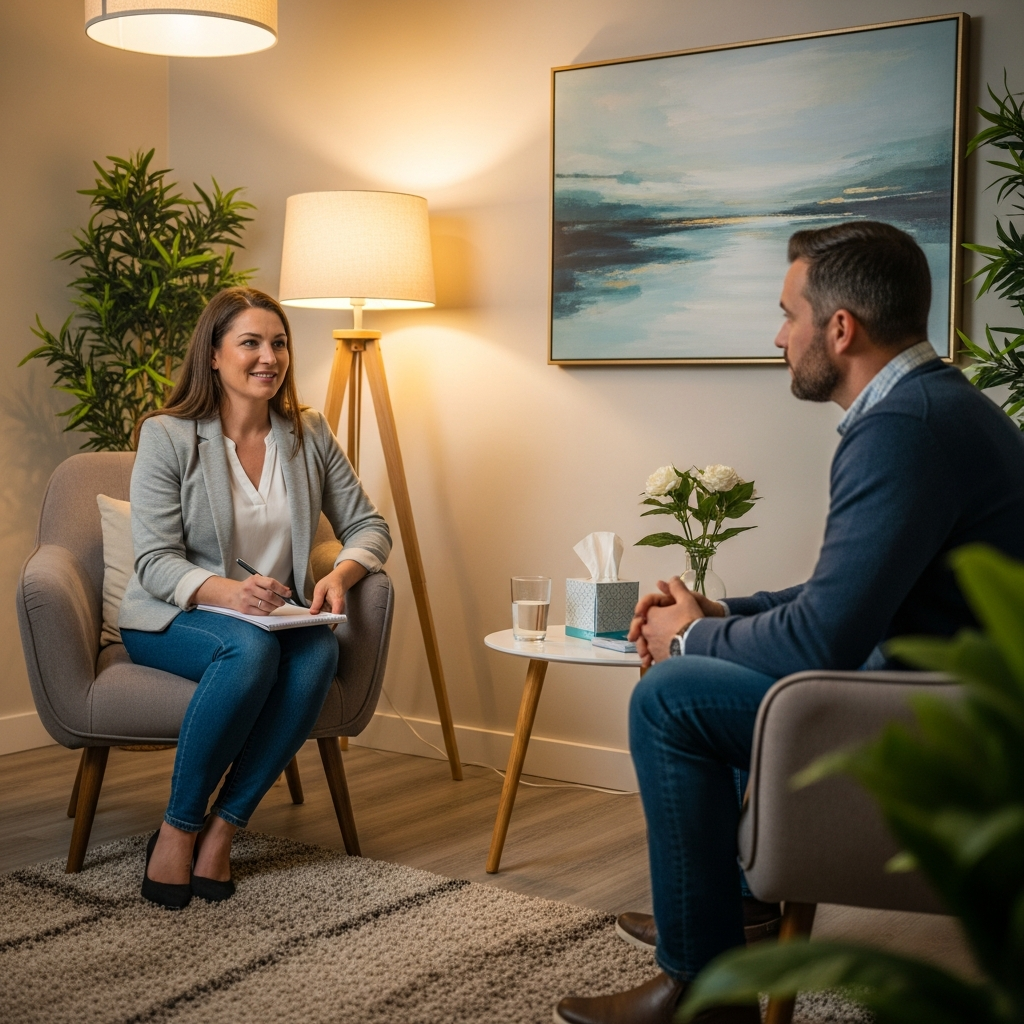
That’s often how complex PTSD works. It doesn’t announce itself the way people expect trauma to. It doesn’t always look like someone who can’t function. More often, it looks like someone who functions *too hard* — who keeps everything running, keeps everyone else okay, and quietly falls apart when no one’s watching. If you’ve been wondering why you feel chronically exhausted by relationships, why you react to certain situations with an intensity that surprises even you, or why no amount of achieving, socializing, or weekend trips down to the shore ever quite settles that low hum of unease — that’s worth paying attention to.
Dr. Audrey Kteily, PhD, LPC-S has spent over 17 years working with people navigating exactly this kind of terrain. Her practice, Dr. Audrey New Jersey, serves clients across the state — and Monmouth County residents have been finding their way to her work for good reason.
What Brings Monmouth County Residents to Trauma Therapy
People come to therapy for all kinds of reasons, and in Monmouth County, the range is genuinely wide. You might be a parent in Rumson or Middletown who’s been holding it together through a difficult family history, telling yourself you turned out fine — but noticing that the way you parent, the way you fight, the way you shut down or explode doesn’t quite match who you want to be. You might be someone in their 30s or 40s in Freehold or Howell who grew up in a chaotic or unpredictable household and has spent years since then trying to out-run the past. Or you might be a professional who relocated to the Shore region for a quieter life, only to find that the stress and reactivity you’d hoped to leave behind followed you here.
Complex PTSD — sometimes written as C-PTSD — develops differently than single-incident PTSD. It’s typically rooted in prolonged exposure to difficult experiences: childhood neglect, emotional abuse, growing up with a parent who was volatile or unpredictable, being in relationships where you consistently felt unsafe or controlled. The nervous system adapts to survive those environments. And then, long after you’ve left, it keeps adapting in ways that cost you — in your relationships, your sense of self, your ability to feel genuinely at ease.
PTSD therapy and trauma therapy aren’t just about revisiting the past. Done well, they help you understand the patterns your nervous system developed, where they came from, and how to gradually build a different relationship with yourself and the people around you. That’s the kind of work Dr. Audrey Kteily does — thoughtful, clinically grounded, and tailored to what’s actually happening for you, not a generic protocol applied to everyone who walks through the door.
Why Dr. Audrey Kteily Stands Out as a Therapist and Psychotherapist
There’s no shortage of therapists in New Jersey. But finding a psychotherapist who specializes in complex trauma — who brings both academic rigor and real clinical depth to that work — is a different matter. Dr. Kteily holds a PhD, is a Licensed Professional Counselor-Supervisor (LPC-S), and is a Certified Family Life Educator (CFLE). That combination matters because complex PTSD rarely exists in isolation. It affects how you attach to others, how you show up in family systems, how you parent, how you partner.
Her approach draws on an understanding that healing from trauma isn’t linear, and it isn’t just about coping skills. It’s about making sense of your own story — the parts you’ve avoided, the parts you’ve tried to bury, the parts that keep showing up uninvited. Whether you’re coming in as an individual dealing with the aftermath of a difficult childhood, or you’re a family trying to understand how past pain is affecting your relationships now, the work is grounded in evidence and delivered with genuine care.
Seventeen years of clinical experience means she’s worked with people at very different stages of understanding their own trauma. Some clients come in with a clear sense of what happened and why they’re struggling. Others come in knowing only that something feels off — that they’re more reactive than they’d like, or more withdrawn, or more exhausted by intimacy than seems reasonable. Both starting points are valid.
Getting to Dr. Audrey New Jersey from Monmouth County
The New Jersey office is accessible from across Monmouth County without an unreasonable commitment. From Red Bank or Shrewsbury, you’re typically looking at under 45 minutes depending on your route. Clients coming from Freehold can head north via Route 9 or Route 18. From the more southern parts of the county — towns like Howell or Jackson — the drive is longer but still manageable for many people, particularly those who are intentional about finding the right fit in a therapist rather than just the most convenient option.
For some people, the drive itself becomes part of the process — a transition time between the demands of daily life and the space to actually think. Others prefer telehealth for some or all of their sessions, which Dr. Audrey New Jersey also offers to New Jersey residents.
The real question isn’t about distance. It’s about whether you’re ready to take what you’ve been carrying and actually work through it — with someone who has the training, the experience, and the clinical sophistication to help you do that well.
If you’re in Monmouth County and you’ve been searching for trauma therapy, complex PTSD support, or a therapist who genuinely understands how early experiences shape adult life, this is a practice worth reaching out to.
Source: www.apa.org
Trauma Therapy and Mental Health Services Available to Monmouth County Residents
Monmouth County residents dealing with the effects of trauma, complex PTSD, or longstanding mental health struggles have access to specialized, doctoral-level care through Dr. Audrey Kteily’s New Jersey practice. Whether you’re coming from Red Bank, Freehold, Rumson, Holmdel, Colts Neck, or Tinton Falls, the commute to her office is manageable — and for many clients, it’s become a deliberate part of carving out protected time for their own healing.
From most central Monmouth County locations, the drive typically runs 45 to 60 minutes, depending on traffic and your starting point. Residents near the northern edge of the county — Keyport, Keansburg, Aberdeen — tend to be on the shorter end of that range. Those coming from the southern portions near Asbury Park, Long Branch, or Belmar may find the drive slightly longer but consistently report it’s worth it for the level of specialized care they couldn’t find closer to home.
Complex PTSD and Trauma Therapy
This is the core of what Dr. Audrey’s practice is built around. Complex PTSD is not the same as the PTSD model most people recognize from acute, single-incident trauma. It develops from prolonged, repeated exposure — childhood abuse or neglect, years in a volatile household, sustained emotional manipulation, or cumulative relational harm that never had a name until now.
Many Monmouth County clients arrive having already tried therapy before. They’ve worked with someone local, perhaps in Freehold or Tinton Falls, who was a perfectly competent generalist — but complex trauma requires a different clinical approach. Dr. Audrey’s PhD-level training and 17 years of focused practice mean she understands how chronic trauma reorganizes the nervous system, disrupts identity, and makes ordinary relationships feel perpetually unsafe.
Treatment is individualized. Sessions don’t follow a rigid protocol where every client gets the same workbook and the same sequence of sessions. Instead, the pace, depth, and specific approaches are calibrated to what each person actually needs — which varies enormously even among people with similar trauma histories.
PTSD Therapy for Single-Incident and Acute Trauma
Not everyone who comes to Dr. Audrey’s practice is dealing with years of accumulated harm. Some Monmouth County residents are living through the aftermath of a specific, shattering event — a serious accident on the Garden State Parkway, a medical emergency, a violent crime, sudden loss. PTSD after these events is real, it’s debilitating, and it doesn’t resolve on its own just because time passes.
PTSD therapy in this context involves working directly with the traumatic memory in ways that reduce its intensity and interruptions in daily life. Intrusive thoughts, hypervigilance, sleep disruption, emotional reactivity — these aren’t character flaws. They’re stress responses that got stuck. Therapy helps move them through.
Psychotherapy and Counseling for Anxiety, Identity, and Relational Patterns
Trauma doesn’t always show up with a clear label. Some Monmouth County residents reach out because they’re experiencing chronic anxiety, persistent low self-worth, or a pattern in relationships they can’t seem to break regardless of how much they want things to be different. They don’t necessarily identify as trauma survivors — but the roots of what they’re experiencing often lead there.
Dr. Audrey works as a psychotherapist in the fullest sense: not just providing coping tools but working at the level of underlying patterns, beliefs, and attachment wounds. This is depth-oriented work. It takes longer than symptom management, but it produces changes that hold.
Counseling services address a wide range of concerns including anxiety disorders, depression linked to relational trauma, self-esteem and identity disruption, grief, life transitions, and difficulty trusting others. If you’re in Holmdel, Marlboro, or Manalapan and you’ve been searching for someone who goes beyond surface-level support, this is the kind of practice that was built for that.
Family Therapy and Relational Work
Trauma doesn’t stay contained within one person. It moves through families, reshaping communication patterns, attachment dynamics, and how members relate to one another across generations. Dr. Audrey holds a CFLE (Certified Family Life Educator) credential alongside her licensure as an LPC-S, which means her understanding of family systems is both clinically trained and formally recognized.
Source: www.apa.org
Family therapy services are available for Monmouth County families navigating difficult transitions, communication breakdowns, or the ripple effects of one family member’s trauma on the rest of the household. This work can happen alongside individual therapy or as a standalone service, depending on what the situation calls for.
How Monmouth County Residents Access Services
New clients from Monmouth County typically begin with an initial consultation — a structured conversation that gives Dr. Audrey a clear picture of what you’re dealing with and gives you a clear sense of how she works and whether this is the right fit. There’s no pressure and no assumption that everyone who inquires will become a client.
Sessions are held at the New Jersey office, and telehealth options are also available for established clients when in-person attendance isn’t possible. For many Monmouth County residents, the combination of both — in-person for the deeper relational work, telehealth for continuity during busy stretches — works well practically.
Scheduling is handled directly through the practice. Dr. Audrey keeps a deliberately limited caseload to maintain the quality and depth of attention each client receives. If you’re in Red Bank, Ocean Township, or anywhere across Monmouth County and you’ve been waiting until things get bad enough to seek help — they don’t need to get worse first.
Why Monmouth County Residents Trust Dr. Audrey New Jersey for Trauma and PTSD Therapy
When you’re dealing with complex PTSD or the aftermath of trauma, choosing the right therapist isn’t a casual decision. It’s one of the most important choices you’ll make. Monmouth County residents — whether they’re coming from Rumson, Red Bank, Freehold, or Asbury Park — consistently seek out Dr. Audrey Kteily, PhD, LPC-S, because they’ve realized that proximity alone doesn’t determine quality of care. Sometimes the best therapist for your situation is the one who truly specializes in what you’re going through.
And Dr. Audrey specializes in exactly that.
The Credentials Behind the Care
Dr. Audrey Kteily holds a PhD and is a Licensed Professional Counselor-Supervisor (LPC-S) — a distinction that places her in a relatively small category of mental health professionals in New Jersey. She’s also a Certified Family Life Educator (CFLE), which matters enormously when trauma doesn’t stay contained to one person. It ripples through relationships, parenting dynamics, and family systems in ways that a generalist therapist may not fully understand or know how to treat.
With 17 years of clinical experience, Dr. Audrey has worked with a wide range of presentations — from single-incident trauma to the layered, complex PTSD that develops from prolonged abuse, childhood neglect, relational betrayal, or years of chronic stress. That depth of experience means she’s not learning her approach on your time. She’s refined it.
Her credentials aren’t just letters after a name. They represent training, supervised hours, examinations, and a sustained commitment to doing this work at a high level. For Monmouth County residents who’ve tried therapy before and found it lacking, that distinction matters.
A Real Specialization — Not a General Practice That Lists Everything
One thing that sets Dr. Audrey apart from many therapists you’ll find in Monmouth County is genuine focus. Plenty of therapists list trauma, PTSD, anxiety, depression, couples counseling, family therapy, and grief support all on the same website. That’s a red flag worth paying attention to. Effective trauma therapy — especially for complex PTSD — requires a clinician who has gone deep into this particular work, not someone who treats it as one item on a long menu.
Dr. Audrey’s practice centers on complex PTSD, trauma therapy, and the relational and family dynamics that trauma disrupts. If you’ve been living with hypervigilance, emotional dysregulation, dissociation, or the persistent sense that you’re fundamentally broken or unsafe, you need someone who understands these symptoms not just conceptually, but clinically — someone who knows how to pace trauma processing appropriately, how to build the therapeutic relationship that makes healing possible, and how to help you function better in your daily life while that healing unfolds.
That’s what Monmouth County residents are traveling for. And based on the outcomes they experience, it’s worth every mile.
Source: www.jamanetwork.com
Book an Appointment
Proudly serving Monmouth County residents at our New Jersey location.
Addressing the Travel Question Honestly
Yes, there’s a drive involved. Depending on where you’re coming from in Monmouth County, you’re typically looking at 45 minutes to just over an hour to reach the New Jersey office — traffic-dependent, as anyone familiar with the Garden State Parkway already knows. From Freehold or Manalapan, you’re often on the shorter end of that range. From Long Branch or Asbury Park, plan for a bit more time, especially if you’re traveling during peak commute hours.
Here’s what most clients say after making that drive a few times: it becomes part of the process. The commute creates a natural transition — from your regular life into the space where you do the work. Many people find they actually appreciate having that buffer. And for something as important as trauma recovery, the geographic inconvenience tends to fade quickly compared to the value of working with someone who genuinely fits what you need.
For those with demanding schedules — and Monmouth County is full of them, from professionals commuting to New York to parents managing full households — appointment planning is worth discussing directly with the practice when you reach out.
Family Therapy That Understands Trauma’s Reach
Complex PTSD and trauma don’t live in isolation. They affect marriages, parenting, sibling relationships, and family communication in profound ways. A parent processing unresolved childhood trauma may find themselves reacting to their own children in ways that confuse and distress them. A couple may hit walls in their relationship that trace back directly to one or both partners’ trauma histories.
Dr. Audrey’s background as a Certified Family Life Educator means she holds both the individual and the systemic picture simultaneously. She understands how trauma shapes attachment, how it affects the way families organize themselves around a wounded member, and how healing one person can — when done thoughtfully — shift the entire relational ecosystem around them. For Monmouth County families navigating these complex dynamics, that integrated perspective is often exactly what’s been missing from previous therapeutic experiences.
What Sets This Practice Apart When Everything Else Has Felt Generic
Many people who contact Dr. Audrey’s practice have already tried therapy. Some have tried it more than once. They come to this office because something in the previous experiences didn’t hold — maybe the therapist was kind but not trauma-informed, maybe the approach felt too surface-level, maybe they sensed they were being managed rather than truly helped.
Dr. Audrey doesn’t offer a one-size-fits-all protocol. The work is tailored, grounded in evidence-based approaches to trauma, and built on a therapeutic relationship that takes time to develop but makes the real breakthroughs possible. For Monmouth County residents who are finally ready to stop cycling through therapists and commit to the right one, this practice offers something worth the search — and yes, worth the drive.
How far is Dr. Audrey’s office from Monmouth County, and is the drive worth it?
Most parts of Monmouth County are roughly 45 minutes to an hour from Dr. Audrey’s New Jersey office, depending on where you’re coming from. If you’re in Red Bank or Middletown, you’re looking at a fairly straightforward drive north. From Freehold or Marlboro, you’ll likely hop on Route 9 or the Garden State Parkway and head up from there. Holmdel and Hazlet residents are often pleasantly surprised — the drive is more manageable than they expected.
Is it worth it? That’s a fair question, and it depends on what you’re looking for. If you’ve already tried a therapist closer to home and didn’t feel like you were making real progress — especially with something as layered as complex PTSD or trauma — then yes, the commute is often the smallest part of the equation. Many Monmouth County clients describe the drive itself as useful transition time, a mental buffer between regular life and the work they’re doing in session. Dr. Audrey also offers telehealth options, which means you don’t always have to make the trip in person.
What makes Dr. Audrey’s approach to trauma therapy different from a general therapist?
This is one of the most important questions you can ask before starting therapy. A general therapist can be helpful for many things — stress, life transitions, relationship friction — but complex PTSD and trauma require a specific clinical lens that not every therapist has.
Dr. Audrey Kteily, PhD, LPC-S, has spent 17 years working specifically in this space. Her doctoral-level training, combined with certifications like CFLE, means she understands how trauma doesn’t just live in memories — it lives in the body, in relationships, in how you respond to ordinary moments that feel anything but ordinary. If you’ve experienced repeated or prolonged trauma (childhood abuse, domestic violence, years of emotional neglect, or other chronic stressors), a specialist matters. Generic therapy can sometimes even feel retraumatizing if the practitioner isn’t equipped to pace and contain the work properly. That’s not a risk worth taking.
Source: www.counseling.org
Does Dr. Audrey work with families, or is it only individual therapy?
Dr. Audrey works with both individuals and families. For Monmouth County residents dealing with trauma that’s touched the whole household — whether that’s a parent whose unresolved PTSD is affecting their parenting, or a family navigating the aftermath of a traumatic event together — family therapy can be an important part of the picture.
Family sessions aren’t about assigning blame or sitting in a room while everyone argues. They’re structured, clinical conversations aimed at understanding how trauma patterns move through relationships, and how family members can support healing rather than accidentally reinforce old wounds. If you’re unsure whether individual or family therapy is the right starting point, that’s exactly the kind of question worth raising in an initial consultation.
What should I expect during the first few sessions?
The first session isn’t about diving straight into the hardest material. That would actually be counterproductive. Instead, Dr. Audrey focuses on building a clear clinical picture — understanding your history, what’s brought you to this point, and what you’re hoping to change. It’s also a chance for you to get a feel for whether the fit is right.
With complex PTSD in particular, the early phase of treatment is largely about establishing safety and developing the internal resources you’ll need before processing deeper trauma. Don’t expect to feel “fixed” after session one — but most clients do leave that first appointment feeling heard in a way they haven’t before. That matters.
Does Dr. Audrey accept insurance, and what are the payment options for Monmouth County clients?
Insurance and payment questions are practical, and they deserve a straight answer. It’s best to contact the office directly to confirm current insurance panels and out-of-pocket rates, since these details can change. What’s worth knowing is that many clients find ways to use out-of-network benefits, HSA or FSA accounts, or sliding-scale arrangements when cost is a genuine concern. The first step is simply reaching out — the office can help you figure out what works before you’ve committed to anything.
You Don’t Have to Keep Carrying This Alone
There’s something that takes real courage about reaching out for help — especially when you’ve spent years managing everything on your own, convincing yourself that what happened wasn’t that bad, or that you should be over it by now. If you’re a Monmouth County resident reading this page, chances are you’ve already done a lot of that quiet, invisible work. The late nights. The hypervigilance you can’t quite explain to the people closest to you. The way certain situations or conversations seem to pull you back somewhere you don’t want to go.
That’s not a character flaw. That’s what complex trauma does to a person.
Whether you’re coming from Red Bank, Freehold, Asbury Park, Holmdel, or anywhere else across Monmouth County, the distance to Dr. Audrey’s New Jersey office is manageable — and what’s waiting on the other side of that drive is genuinely worth it. Many clients find that having a dedicated commute to therapy actually helps them arrive ready. It creates a boundary between the rest of life and the work you’re doing for yourself.
Dr. Audrey Kteily brings 17 years of experience to every session, along with a doctoral-level understanding of how trauma lives in the body, the relationships, and the thought patterns that shape your daily life. Her approach isn’t about assigning homework or walking you through a checklist. It’s about building a real therapeutic relationship — the kind where you can say the thing you’ve never said out loud and feel met rather than managed.
For individuals dealing with complex PTSD, the healing process rarely looks linear. Some weeks feel like significant breakthroughs. Others feel heavier. Dr. Audrey understands that, and she works with you through all of it — not just the moments that are easy to talk about.
Monmouth County residents also have access to telehealth options, which means if your schedule, your kids, or the unpredictability of the Garden State Parkway on a bad day makes in-person visits difficult, you’re not without options. Flexibility matters, and it’s built into the practice intentionally.
If you’ve been on the fence — searching, reading, closing the tab, and coming back again — consider this a gentle nudge. Not a push. You get to decide when you’re ready. But if you’re here and you’re feeling something stir reading these words, that’s usually worth paying attention to.
Book an Appointment today and take the first step toward working with Dr. Audrey Kteily, PhD, LPC-S. You can reach the New Jersey office directly by phone, or use the online booking option if that feels easier. Both are available to you, and both lead to the same place — a conversation with someone who is genuinely qualified to help, who has helped people navigate some of the hardest terrain imaginable, and who will treat your story with the care it deserves.
Monmouth County residents are warmly welcomed. Wherever you’re starting from, whatever brought you to this page tonight — you belong here, and there’s real help available.
Book an Appointment
Proudly serving Monmouth County residents at our New Jersey location.